In onze projecten we design concrete yet bold solutions that are vehicles for social change. We work in a wide range of domains, from mental health to restoring biodiversity and everything in between.
Some of the projects we are working on right now.
.jpg?key=md)
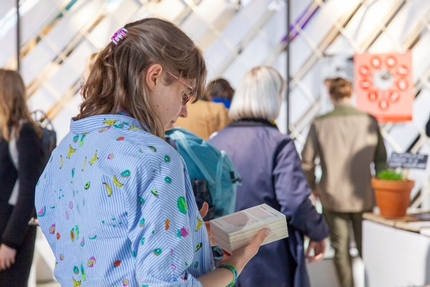
Together with Stichting De Verre Bergen, we are working on The City as a Classroom, an innovative learning pathway in which primary school pupils in Rotterdam gain new experiences in their own city in a playful and educational way.
In co-creation with children, teachers, cultural institutions, and city partners, we develop teaching materials that align with the curriculum, are practically applicable, and offer meaningful experiences. By playing, exploring, and experimenting in their own city, children develop into curious and engaged Rotterdammers.
photograph by Hester Blankestijn

The future of Hollands Noorderkwartier is marked by profound change. Water-system challenges are becoming increasingly intertwined with other societal transitions, such as the energy transition, freshwater availability, and the use of resources. This growing interconnection raises the question of how HHNK can continue to fulfil its public duty in the future, and how it can further develop and deploy its adaptive capacity to remain relevant to society in the long term (2050+).
In collaboration with HHNK, we are developing a concept and a vision for the future water system of Hollands Noorderkwartier in 2050 and beyond. The focus is on ensuring social and ecological justice in an uncertain future shaped by diverging and sometimes opposing dynamics.

This design research project focuses on renewing diagnostic practices in child and adolescent psychiatry. Rather than centering on fixed DSM labels, it focuses on the patterns in which young people become stuck, such as recurring interactions between behavior, relationships, and their environment. Together with young people, parents, and healthcare professionals, we develop alternative forms of diagnosis that better align with young people’s lived experiences and everyday clinical practice.
Building on the Patterns of Life model, the project explores how diagnostic processes can foster understanding, reduce stigma, and expand agency. Through research, user experience, co-creation and prototyping, we design and test concrete diagnostic processes and tools. At the same time, we investigate how design can support the adoption of new ways of thinking within a complex mental healthcare system.

Changing the food and agriculture sector in the Netherlands is inevitable. Currently, climate change, the nitrogen crisis, and biodiversity loss are daily topics in the Dutch news. It is time to transition to a fair and sustainable food system. But how can we produce enough healthy food for current and future generations? How do we relate to nature and animals in a future food system? What will the future role of the farmer look like? Together with a wide variety of stakeholders we have been working on this transition for over a decade. Below we describe a few of the projects we worked on.
Team
Arjen Oenema
Beatrijs Voorneman
Emilie Tromp
Femke de Boer
Kas Woudstra
Lotte Jacobse
Lucca Kroot
Minke Dijkstra
Partners
Food Hub
FETE
Ministerie van LNV
RVO
TU Delft
Wageningen University
& more
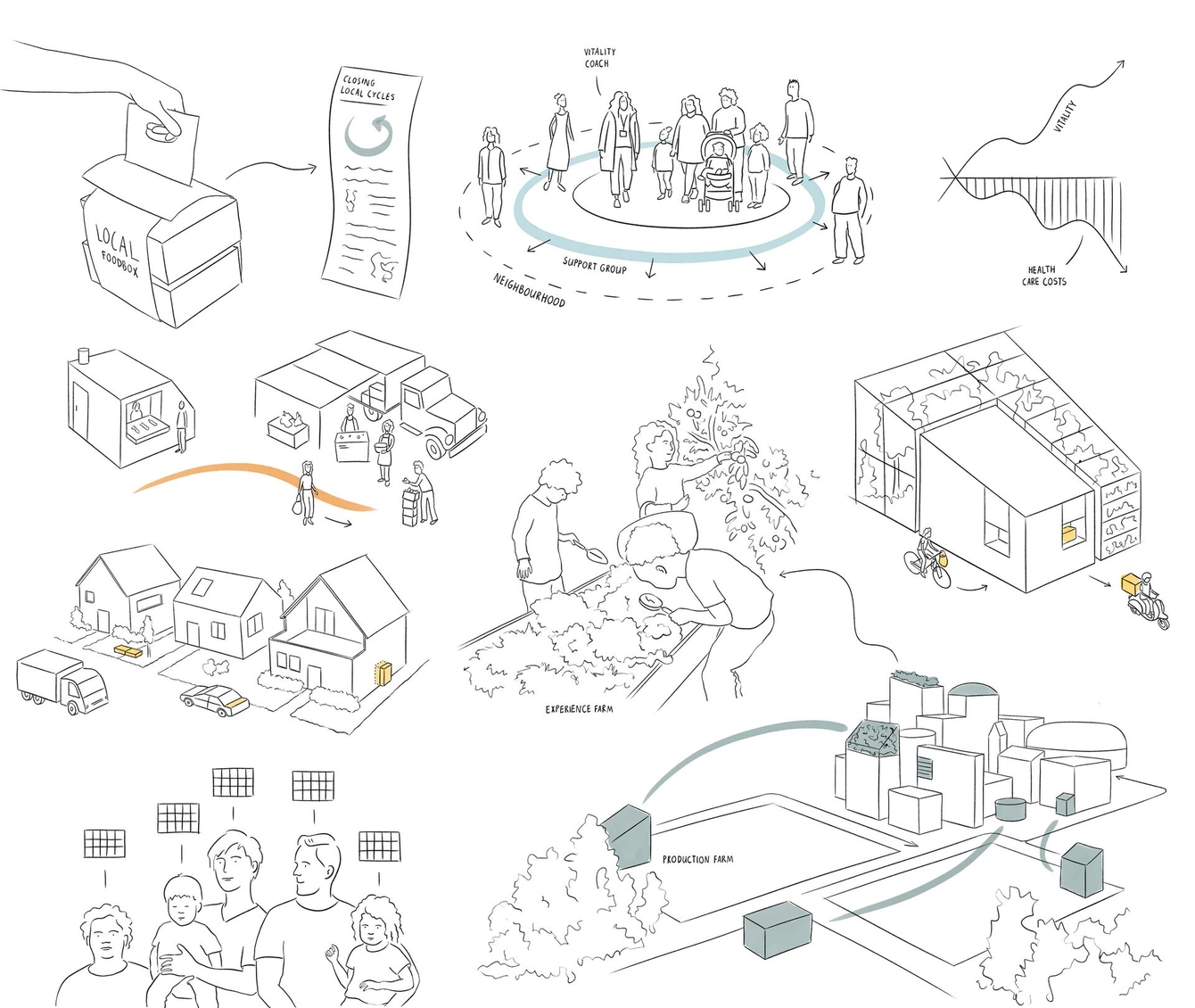
Our current food system is grounded in assumptions about the need for excessive availability of food and choices and elaborate choice which comes at considerable societal costs of inefficient resource use and tremendous levels of food loss and waste. Instead of increasing efficiency within the current food system by optimizing planning and logistics, the FETE project aims to support a transition towards a different system that can cope better with unpredictable dynamics in demand and supply. The FETE (from excess to enough) research team consists of Delft Design researchers and people from Wageningen University, Groningen University and several food companies such as Iglo, HAK and Hello Fresh. To gain insight into what such a future food system could look like, FETE collaborated with Reframing Studio. We envisioned a food system where consumers, retailers, and producers fulfill different roles to provide our society with enough food. A system that helps to increase our appreciation of food and encourages us to purchase less without compromising on food quality, variety, or convenience. And that embraces flexibility, regulates vitality, recognises the value of food, and optimises through learning.

Some sketches of the new food systems that we imagined for the FETE project
Food Hub works to transition to a fair, diverse, and sustainable food system by creating thought-provoking food education, promoting future-proof perspectives, and collaborating with new and established parties across the sector. We support Food Hub in their education programmes such as the Boerenversneller, where we help farmers and their families to define future proof ambitions. And at the SFYN Academy as well as the Flevocampus we help young food professionals with finding their personal mission as part of the transition to a sustainable food system.

Photo by Charlotte Arend | Reframing workshop for the Slow Food Youth Network

Reframing workshop at Flevo Campus

Photo by Charlotte Arend | Reframing workshop

Flevo Campus: Guiding participants through the Reframing process
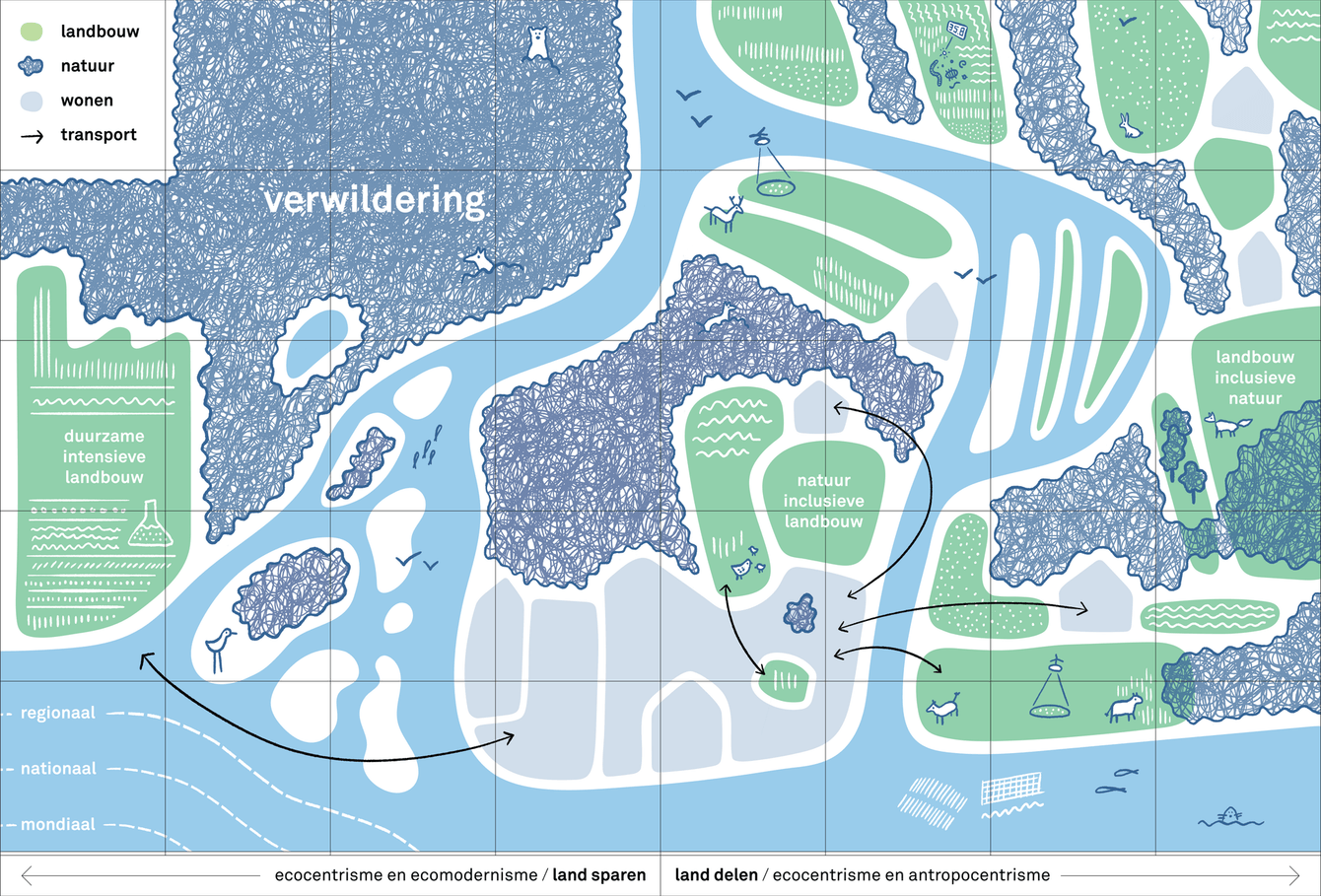
RVO (Netherlands Enterprise Agency) asked Reframing Studio to combine a selection of different future visions on sustainable agriculture and food into one shared vision. The debate around the future of our food system is however characterized by various opposites - nature versus agriculture, meat versus plant-based, intensive versus extensive, etcetera - and there is not one solution. A coherent future vision is about finding the right balance in an ongoing conversation. For that reason we designed a conversation starter that helps farmers, policy makers, entrepreneurs, nature conservationists, and other stakeholders to discuss how the use of land can be balanced sustainably.
![Kaart Template [recovered]](/uploads/990e1dfa-4d58-11f1-a0cd-244bfe8818be/kaart-template%20%5BRecovered%5D.png?key=lg)
A map that is part of the conversation starter for RVO.
Reframing Studio has been working on the future of our food system for over a decade. In this decade we had the honour to work with inspiring farmers, changemakers, researchers, policy makers, cows, and pigs.
Sustainable agriculture for RVO
Minke and Beatrijs designed a conversation starter to discuss the future of the Dutch food and agriculture system for RVO and explored how RVO can contribute to the transition to a sustainable food and agriculture system.
From excess to enough (FETE)
FETE collaborated with Reframing Studio to develop possible directions for the food system. We investigated how we can transition from having excess to having enough.
Biodiversity
Femke and Sal worked on a shared perspective on biodiversity for the different departments of the government which brings people, planet, and profit together.
Koetopia
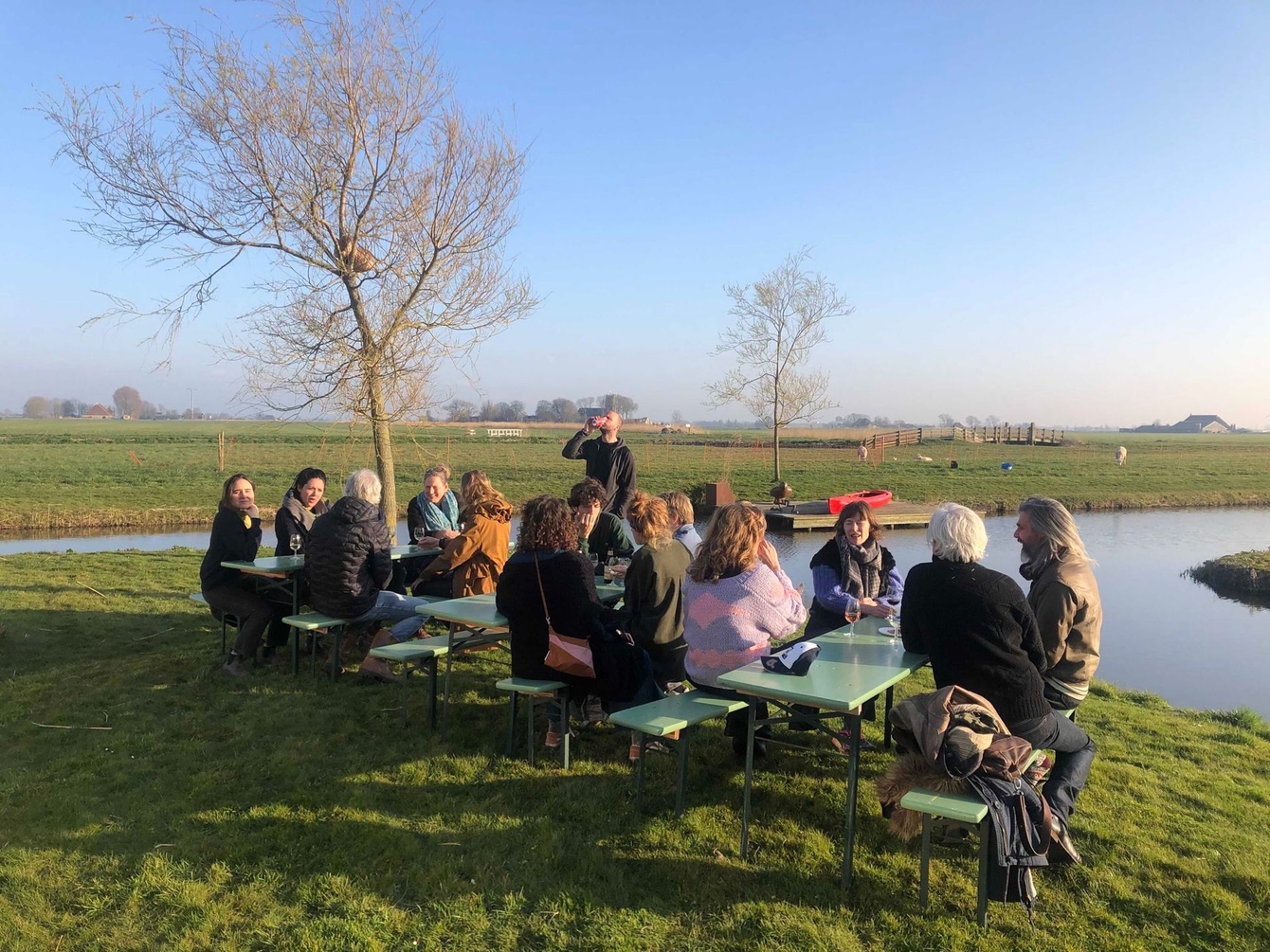
Arjen and Beatrijs collaborated with farmers Christian and Sanne to design their dairy farm. It became a resting point in the busy and hurried lives of local residents.
The future of bread
Lotte and Minke investigated the relation of consumers with their daily bread in order to come up with interventions to market a new type of bread.
Reframing manure
Reframing Studio researched the future of manure from the perspective of the consumer. What role will manure play in their future lives?
Food Hub was founded
Joszi founded Foodhub together with Joris. Their aim is to guide the transition to a fair and sustainable food system. This started a long lasting collaboration. Up to today we continue to give yearly Reframing workshops for the Boerenversneller, the Rabo Foodtracks, and others.
Slow Food Youth Network
Beatrijs decided to join the Slow Food Youth Network and meets Joszi. The next edition Lotte and Emilie gave a Reframing Workshop at the Slow Food Academy - which became a yearly favourite workshop amongst Reframers.
Toys for pigs
Beatrijs graduated from the TU Delft with a thesis on toys for pigs. That same year she started at Reframing Studio and brought in a passion for food and agriculture.
Food is also there to enjoy! Eating food is something Reframers are also really good at!